
Digital X-Rays in Oakville, ON
Digital X-Rays Near You
Some dental problems develop in areas that can’t be fully seen during a visual examination. Digital X-rays give dentists additional information about your teeth, roots, jawbone, and surrounding structures. At Rosegate Dental Centre, we use digital X-rays in Oakville, ON, when imaging is clinically appropriate for diagnosis, monitoring, or treatment planning.
If you are looking for digital X-rays near you, our team can first assess your oral health and determine whether imaging is needed. We explain why an X-ray is recommended and what information it can provide before taking it.
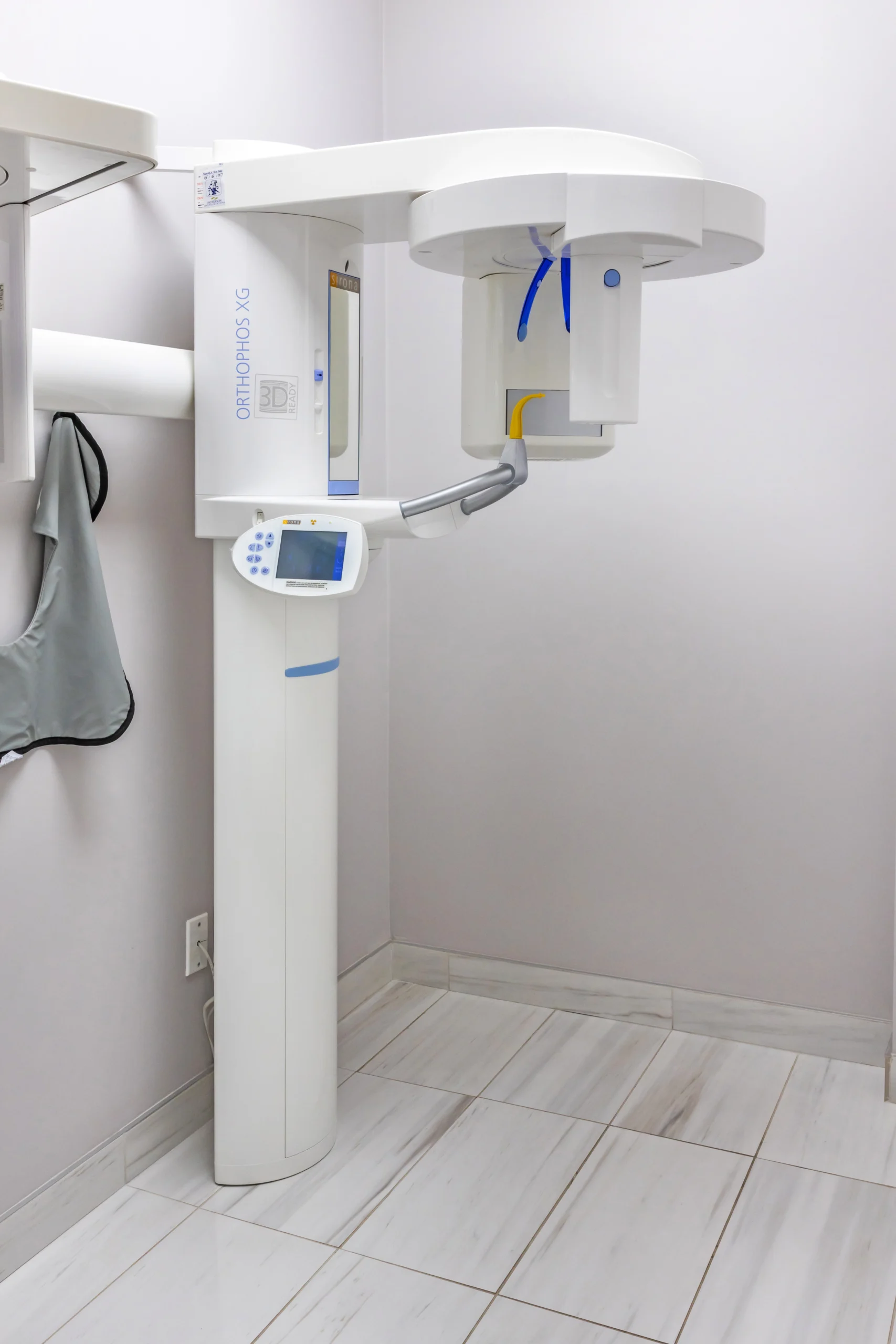
What Are Digital X-Rays?
Digital dental X-rays use electronic sensors or imaging systems to produce radiographic images that can be viewed on a computer. They allow dentists to examine structures that may not be visible during a regular dental examination.
Rosegate Dental Centre offers several types of digital dental imaging:
Intraoral X-rays
These provide detailed images of individual teeth and surrounding structures and may be used to assess concerns such as decay, roots, or bone levels.
Panoramic X-rays
These produce a broad image of the teeth, upper and lower jaws, and nearby structures.
Cephalometric X-rays
These provide a side view of the head and jaws and are commonly used as part of orthodontic assessment and treatment planning.
The type and number of images recommended depend on your dental history, current oral health, symptoms, and the information your dentist needs.
What Can Digital X-Rays Help Detect?
Depending on the type of image, they may help dentists assess:
Tooth decay, including areas between teeth
Tooth roots and surrounding bone
Bone levels around the teeth
Developing or unerupted teeth
Dental infections or changes around tooth roots
The position of teeth and jaws
Certain injuries or damage
Areas being considered for restorative, orthodontic, or other dental treatment
Digital imaging can also help monitor changes over time. Previous images may be compared with newer ones when clinically appropriate.
If your dentist recommends digital X-rays in Oakville, ON, we will explain what type of image is needed and why it may be helpful.
What Are the Benefits of Digital X-Rays?
Digital imaging supports dental diagnosis and treatment planning in several ways:
Detailed information
X-rays can show tooth roots, bone, and other structures that are difficult or impossible to assess visually.
Different imaging options
Intraoral, panoramic, and cephalometric images provide different views depending on the clinical need.
Digital image viewing
Images can be displayed electronically for the dental team to review.
Treatment planning
Dental X-rays may support planning for restorative, root canal, orthodontic, and other types of treatment.
Ongoing monitoring
Images can be compared over time when a dentist needs to monitor a particular area or condition.
Early identification
Some dental concerns may be visible on an X-ray before they cause obvious symptoms.
X-rays are not required at every dental visit. Their frequency should be based on your individual oral health and clinical needs.
What Happens When Digital X-Rays Are Taken?
Digital imaging is usually a short part of a dental appointment. The exact process depends on the type of X-ray.
Reviewing your needs
We consider your dental history, symptoms, examination findings, and available previous X-rays.
Selecting the appropriate image
We determine which type of X-ray can provide the information needed.
Positioning you and the equipment
For intraoral images, a small sensor or receptor is positioned inside the mouth. Panoramic and cephalometric images use equipment positioned around the head.
Taking the image
We will ask you to stay still briefly while the image is captured.
Reviewing the results
Our dental team can then examine the digital image.
Discussing relevant findings
We explain what the images show and whether further care is recommended.
If you are searching for digital X-rays near you, an examination at our dental clinic in Oakville, ON, can help determine whether imaging is appropriate for your needs.
Are Digital Dental X-Rays Safe?
Dental X-rays use ionizing radiation, so they should only be taken when the expected diagnostic benefit justifies the exposure. The radiation dose from dental X-rays is generally low, and dental professionals take steps to keep exposure as low as reasonably achievable while obtaining the information needed.
How often X-rays are recommended varies from person to person. Someone with stable oral health may need imaging less frequently than someone with active decay, gum disease, dental symptoms, or treatment that requires monitoring.
Tell our team if you are pregnant or think you may be, so we can consider this when planning your care.
Why Choose Rosegate Dental Centre for Digital X-Rays?
Multiple digital imaging options
We offer intraoral, panoramic, and cephalometric digital X-rays depending on the clinical need.
Fully digital practice
Our clinic uses digital X-rays and digital patient charts to support record keeping and treatment planning.
Additional dental technology
Our practice also uses a 3D scanner as part of our digital approach to dental care.
Established Oakville practice
Rosegate Dental Centre has served the community since 2017. Dr. Bushra Mousa, Dr. Haissam A. Kanaan, and Dr. Nagham AlSahaf provide dental care.
Multilingual team
Our team members speak English, Mandarin, Arabic, Serbian, and Filipino.
Insurance assistance
Our office can contact your benefit provider, submit insurance claims on your behalf, and assist with requests from your insurer.
Book Your Dental Appointment
Digital imaging can provide valuable information when your dentist needs a closer look at areas that cannot be fully assessed during an examination. At Rosegate Dental Centre, we provide digital X-rays in Oakville, ON, as part of appropriate diagnostic, preventive, and treatment planning care.
Complimentary consultations are available. Call (905) 257-6255 to book an appointment with a dentist near you. You can also contact us at info@rosegatedental.ca.
FAQs
How often do I need dental X-rays?
There is no single schedule that applies to everyone. How often X-rays are recommended depends on your oral health, dental history, age, symptoms, risk of dental disease, and whether a particular condition needs to be monitored.
What can digital X-rays show?
Depending on the type of image, dental X-rays can show tooth roots, supporting bone, areas between teeth, developing teeth, and other structures that are difficult to assess during a visual examination.
Are digital X-rays used for children?
Yes, when clinically appropriate. A dentist may recommend dental X-rays for a child to assess decay, tooth development, eruption, injuries, or another specific concern. We take images based on the child’s individual needs rather than automatically at every visit.
What is a panoramic X-ray?
A panoramic X-ray produces a broad image that includes the upper and lower teeth, jaws, and surrounding structures. It may help assess tooth development, impacted teeth, jaw structures, or treatment planning.
What is a cephalometric X-ray?
A cephalometric X-ray provides a side-view image of the head, teeth, and jaws. It is commonly used during orthodontic assessment because it helps evaluate the relationship between the teeth, jaws, and facial structures.